Showing posts with label Gov. Rick Scott. Show all posts

Wednesday, August 24, 2016

News Laws Mean Little When DCF Fails Kids

Last month, Marjorie Dufrene, left, appears in front of Judge Cindy Lederman in Miami. Carl Juste cjuste@miamiherald.com

Read more here: http://www.miamiherald.com/opinion/editorials/article97469932.html#storylink=cpy

Read more here: http://www.miamiherald.com/opinion/editorials/article97469932.html#storylink=cLawmakers gave DCF a $44 million infusion to hire 270 child-protective investigators and ensure that they were well-educated and properly trained.And still Angela died.
Her tragic case makes clear that the lessons of “Innocents Lost” have been lost themselves. At least five entities, including ChildNet, which provides case management in Broward County, the attorney general’s office and the Broward Sheriff’s Office, knew about the abusive circumstances into which Angela and her twin brother were born. Ms. Dufrene was a violent and abusive parent who herself needed help. She was ill-equipped to deal appropriately with her developmentally disabled son, whom she beat with a belt so severely that he lost sight in one eye, which took surgery to restore. She beat him when he misspelled words; she punched him in the head when he spilled some juice. He was left so bloody that teachers called the state’s abuse hotline, and the child was placed in foster care.
Subsequent calls to the hotline for incidents of domestic abuse between Ms. Dufrene and her husband should have kicked off a seamless intervention on behalf of Angela and her twin brother, who were born while their older brother — and another child, a girl — still were in foster care.
By then, Ms. Dufrene was homeless and had barged in on a friend who had an apartment, refusing to leave. The friend, too, called DCF. But a committee of child-welfare administrators decided that Ms. Dufrene was capable of providing a safe environment for her twins, and she was allowed to leave the hospital after giving birth. There was no followup, no regular home inspections ordered.
The collective lack of common sense is absolutely breathtaking. Instead of considering the breadth of the family’s tortured history, finicky administrators worried that since the twins had never been abused, they could not be removed from the home.

This is putting the safety of children first? In what universe did they expect Ms. Dufrene to become the model mom? This is the lack of critical thinking and skepticism that components of the new law were supposed to address.
It’s infuriating, because we’ve been here before. In 2013, just a year before the sweeping DCF overhaul, the agency instituted something called “the Safety Methodology” to address the inefficient process, fractured work systems and huge level of investigator turnover that, in part, contributed to the death of Nubia Barahona, 10. In 2011, her partially decomposed body was found, wrapped in a plastic garbage bag, in the back of her adoptive father’s pickup truck.
But once more, several agencies banded together to do what’s best for children at risk. They failed miserably, and little Angela Dufrene died.

http://www.miamiherald.com/opinion/editorials/article97469932.html

Read more here: http://www.miamiherald.com/opinion/editorials/article97469932.html#storylink=cpy

Wednesday, June 25, 2014

Grand Jury Rips Florida’s DCF For ‘Deliberately’ Undercounting Child Deaths

cmarbin @MiamiHerald.com

A Miami-Dade grand jury accused state child welfare administrators Tuesday of “intentionally and deliberately” manipulating the investigation of child deaths because of abuse and neglect — making it appear that fewer children were dying across the state.
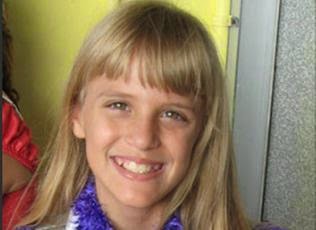
Nubia Barahona, 10, was found dead in the back of her adoptive father's pick-up truck

Read more here: http://www.miamiherald.com/2014/06/24/4199002/grand-jury-rips-floridas-dcf-for.html#storylink=cpy

In a 30-page report that explores whether the Department of Children & Families has improved since the shocking 2011 death of 10-year-old Nubia Barahona, grand jurors found much that pleased them. But they also scolded the agency for what they described as a systematic attempt to conceal the true number of children whose lives are cut short by abuse or neglect.
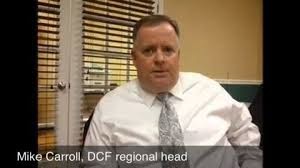
“I thank the members of the grand jury for their comprehensive look at Florida’s child welfare system,” said Mike Carroll,

the agency’s interim secretary. “It is clear from their thoughtful recommendations that they understand the challenges in the work we do, and it’s also clear they recognize our commitment to continuing to improve so we can better protect Florida’s children.”
The grand jury presentment, handed up to Miami-Dade Circuit Judge Gisela Cardonne Ely Tuesday afternoon, comes on the heels of a series of stories in the Miami Herald, called Innocents Lost. Details of the series are discussed in the report. In particular, grand jurors confirmed the Herald’s findings that DCF had revised its definition of “neglect,” resulting in an artificial reduction in the number of children reported to have died the past four years.
The report highlighted a several-paragraph excerpt from the series that detailed the deaths of four children in 2011and 2013 that DCF declined to verify as resulting from neglect. In one case, a 1-year-old boy drowned in a community pool during Memorial Day weekend three years ago while his mother texted friends away from the poolside. DCF said the mother wasn’t negligent because other adults at the pool were likewise failing to supervise their small children.


SOME CHANGES
Every person on the grand jury, the report said, “concluded that each of these preventable deaths occurred due to the neglect of each child’s parent(s),” the report said. “We are at an utter loss to understand how those who labor in the field of child protection and child welfare could intentionally and deliberately find that these deaths were not verified as acts of neglect.”
Changes in the way DCF investigates and discloses child death information, grand jurors wrote, left a cloud hanging over the agency, even as administrators tout reforms. “The public does not have confidence in the accuracy of the number of child deaths reported,” the report said, adding: “Aside from being misleading, reported reductions in the total number of deaths may only be a consequence of changing the definitions of abuse and neglect.”
At the center of the unusual report — grand juries seldom issue such presentments, opting instead to indict alleged offenders without comment — is Nubia Barahona. The tow-headed twin from West Miami was found soaked in toxic chemicals on Feb. 11, 2011, stuffed in a black garbage bag in the flatbed of her adoptive father’s pest control truck. In the passenger seat in front of her, Victor Barahona fought for his life after being doused in the same chemical stew. He survived.


The twins’ adoptive parents, Jorge and Carmen Barahona, remain in jail, awaiting trial on murder charges that potentially carry the death penalty. On July 25, 2011, an earlier Miami-Dade grand jury released a scathing report on DCF’s failure to protect Nubia. “The testimony we heard will stay with us forever, as a bad dream will sometimes stay, only this was not a dream but a reality too painful to fathom,” grand jurors wrote then.
That report criticized DCF for its “utter failure to have the full picture” of parents accused of wrongdoing, and suggested the agency was beset by “a persistent, insidious bias of trust. Here, these two factors combined to exponentially raise the risk of disaster,” the report concluded. “Murder was the result.”
In its report Tuesday, the new grand jury concluded that DCF is implementing improvements at the the agency’s abuse hotline, among child abuse investigators, and in the use of a tool that helps investigators assess risk.
“There is a marked difference between the practices and procedures child protective investigators employed pre-Barahona and the manner in which they conduct [child protective services] investigations now,” the report says.
Some professionals in the child welfare system expressed skepticism that much had changed, however, and suggested prosecutors might have focused on witnesses sympathetic to DCF. Esther Jacobo, who is chief of staff for State Attorney Katherine Fernandez Rundle, had been DCF’s interim secretary until two months ago. She was among the grand jury’s witnesses.
Miami-Dade Circuit Judge Rosa Figarola, who presides over child welfare cases, chairs the county’s Community Based Care Alliance and has been a persistent agency critic, was not asked to testify. “It is arrogant,” she said, “to have a grand jury investigation and not bring in people whom they are concerned might disagree with their point of view. You have to bring everyone involved to the table.”
Child abuse investigations, and the court petitions that sometimes follow, have “improved a little bit” since 2011, Figarola said. “But any attempt to portray the problems that have plagued the child welfare system as fixed should cause us all alarm and concern for the safety and welfare of our children,” she added.
Another judge, Jeri B. Cohen, who oversees the Miami Circuit’s child welfare drug court, said “any self-congratulation is premature.” Though Cohen had testified before the 2011 Nubia grand jury, she was not invited back this year.
Cohen said few of the initiatives grand jurors cited as improvements have been fully implemented, many are applied inconsistently, and virtually all are long overdue. “None of this stuff is working” yet, said Cohen, who also is a member of the child welfare alliance. “The judges are complaining like hell” that the system remains broken.
Though grand jurors commended DCF on the progress made since 2011, they also declared themselves “deeply troubled” by the Herald’s Innocents Lost series, which contained details on the deaths of 477 children — mostly infants, toddlers and children age 5 and below — whose parents had been the subject of at least one report to the state’s abuse hotline within the previous five years.

Gov. Rick Scott signed into law Monday an overhaul of DCF designed to stanch such deaths and create better agency oversight.
Grand jurors seemed particularly troubled by “discrepancies” between the number of child deaths DCF reported to the governor and Legislature, and the number identified by both the Herald and an independent consultant. “In all instances,” the report said, “the numbers given by the Herald, based on its review of DCF’s own records, were higher. Reportedly, numbers tallied by an independent source were also higher than those reported by DCF.”
Indeed, Nubia’s death never entered into an official DCF tally until more than three years after her killing created a firestorm statewide. Nubia’s death was “verified” as resulting from abuse on April 22, 2014 — a week after the first installment of Innocents Lost was published. Her formal death review was dated six days later; it was six pages long.
DISCOVERY
As recently as last month, the Herald discovered administrators in DCF’s Southeast Region — which includes Broward and Palm Beach counties, and which recorded the highest tally of child deaths in recent years — had failed to file required “critical incident reports” for 30 child deaths linked to abuse or neglect. At first, the agency attributed the withheld reports to a “misunderstanding.”
But earlier this month, DCF’s deputy secretary, Pete Digre, completed an internal investigation into the missing records without generating a single record. Carroll, the agency’s administrator, called the withheld reports “an attempt to address insufficiencies in data security.” He denied agency heads were seeking to conceal public records from the Herald.
On Tuesday, state Sen. Eleanor Sobel, a Hollywood Democrat who helped draft the legislation Scott signed the day before, called on the governor to launch an independent investigation into what she has repeatedly called “a cover-up.”
“It appears these were employees directing other employees to conceal child death reports, not simply a system or technical error,” Sobel wrote in a news release. “An independent investigation by a non-DCF related entity is the best way to clear the air and get an unobstructed view.”
“Sweeping child deaths under the rug will only serve to perpetuate a culture of cover-up and corruption; hiding the deaths should never be a solution.”
 http://www.miamiherald.com/2014/06/24/4199002/grand-jury-rips-floridas-dcf-for.html#storylink=cpy

Tuesday, May 20, 2014

DCF-Child-Deaths-Transparency

TALLAHASSEE, Florida — Child-welfare officials said Monday that they are creating a new position within the agency in an effort to improve transparency when releasing child-abuse-death records.


The Department of Children and Families has been under intense scrutiny after a series by The Miami Herald highlighted the deaths of 477 children in the past five years. The newspaper accused the agency of recently shifting its internal policies regarding the sharing of information about child deaths in a way that left the records they released so heavily redacted they were nearly useless.
The details surrounding a child's death are typically public, although names of surviving siblings are confidential.
The person who assumes the new role will oversee data gathering and the agency's responses to child deaths, the officials said.
"When tragedies occur, especially those involving children, our response must be consistent, coordinated, compassionate and transparent," new interim secretary Mike Carroll wrote in a memo Monday to regional managers and the news media.

Tricky Ricky

Gov. Rick Scott appointed Carroll last week. Carroll said he hopes to fill the new position within a month, and he added that the new hire must be given the authority to make policy changes as needed.
Carroll also asked regional managers to finalize plans to streamline reporting so that leaders are immediately informed after a child's death and that information in the reports is consistent and accurate. The Herald series noted serious lag times in reporting child deaths in some cases.
Florida lawmakers also want more accountability from the agency. The Legislature passed a bipartisan bill last week requiring DCF to post child-death information on its website, including the date, region, cause of death, what private contractors were involved and the age of the child. Many of the children identified in the newspaper series were under the age of 5.

http://www.tribtown.com/view/story/cf306db4991f45a29a007602d951f1ec/FL--DCF-Child-Deaths-Transparency

Tuesday, May 6, 2014

Changes Ahead In Child Welfare, But Enough?

Three important things to know about the Florida Department of Children and Families:
• The department has a new leader.
• The Legislature is about to throw a lot more money, resources and manpower at the department in hopes of stemming a tidal wave of child deaths.


• And nobody really knows whether the DCF is yet headed in the right direction — nor will we for quite a while.
A new boss, more funds and a bigger staff should be cause for celebration. But it's easy to hope problems will suddenly be solved within a beleaguered department charged with protecting the state's most vulnerable children.
It's much harder to maintain the focus and pressure necessary to transform a long-troubled agency that has witnessed the deaths of 477 children since 2008, as detailed in a recent Miami Herald series. Each child had relied on DCF's protection. Most ended up dying in horrible ways — starved to death, beaten or worse.
Nonetheless, it is good news that reforms are underway and hope brims anew.
On Friday, the Florida Legislature passed a sweeping overhaul of the state's child welfare laws, most notably changing a policy that encouraged keeping families together, which often meant keeping kids in dangerous homes. Also Friday, lawmakers were expected to agree on a budget that provides an extra $47 million to DCF to hire 200 new investigators.

And earlier this week, Gov. Rick Scott announced his intention to appoint Mike Carroll as the next interim DCF Secretary.
Carroll comes with a substantial resume. He has plenty of experience and expertise in the field of child protection. He enjoys a reputation for being a consummate professional, and passionate about the cause. Years ago, he adopted a child from the state child welfare system.
In addition, Carroll is a veteran leader of the agency's Suncoast Region office, which covers 11 counties. He has helped run a number of social service programs, including those that deal with child welfare, substance abuse and mental illness.
Carroll's past should serve him well. Many of the hundreds of child deaths in the past six years involved parents and caregivers battling alcohol, drug and mental health demons.

Still, it's surprising the governor tapped someone from within a department mired in systemic problems that date back years.
It's also a head-scratcher that Scott chose to make him interim secretary, the third change in leadership in under a year and the sixth in the past 10 years. Florida's child welfare agency is in desperate need of stable leadership, and Scott had nearly a year to find a permanent replacement.
That said, it is a good sign the Secretary-designate is embracing wholesale change. He intends to reduce caseloads for child abuse investigators and address employee turnover. He is calling for a culture change. Most importantly, like state lawmakers, he also supports changing the agency's "family preservation" policy, which has put so many children at risk.
With big changes and more cash on the way, here's hoping Carroll provides a focus that puts DCF on the right path — and that vulnerable children finally have the right protector.

http://articles.sun-sentinel.com/2014-05-02/news/fl-editorial-new-dcf-secretary-dv-20140502_1_child-welfare-child-deaths-suncoast-region

Monday, May 5, 2014

Did DCF The State Fail These Children?

ORLANDO, Fla. —
9 Investigates combed through 10 years' worth of state records and found a deadly problem with Florida's child care system.
State Department of Children & Families records show 16 children in central Florida died during that time period after the agency created to protect them reunited the children with parents who had previous problems identified by DCF.


WFTV's Tim Barber asked DCF officials what, if anything, can be done to prevent at-risk children from being placed back inside dangerous homes?
But first, Barber visited the gravesite of Tariji Gordon, nestled beneath the shade of a large tree at Restlawn Cemetery in Sanford. The memorial is made up with fake flowers and a tin plate bearing the dates that book end a life cut short: "Born in 2011. Died in 2014."
Sanford Police said Tariji was beaten to death by her mother, Rachel Fryer, a parent with a lengthy history with DCF and other child welfare organizations.
Just three months before her death, Tariji was safe and happy in a foster home, so 9 Investigates asked DCF Regional Director Bill D’Aiuto how things could go so wrong?
"If Tariji Gordon never went back to Rachel Fryer, would she be dead today?" Barber asked.
"You know, that's, that's a, you know, tough question, you know, and to speculate on that, ah, you know, certainly looking back, possibly," D’Aiuto responded.
The 2-year old was placed with a loving foster mother after investigators determined Fryer accidentally killed Tariji's twin, Tavontae Gordon, in 2011.
In November, however, the state decided the 32-year-old mother of eight was ready to get her kids back.
But Barber discovered the decision to return Tariji to a deadly home environment was not the only one DCF, other child-care agencies and the courts have made through the years.
After sifting through 10 years of records, Barber found 15 other central Florida children died after they were returned to their parents.
Some were accidents, but others like the deaths of Ja’Quez Baker in Marion, Aurelia Juarez in Seminole, and the four Johnson children -- Joel, Jazlyn, Jaxs and Pebbles -- in Brevard were murders.
Since 2008, hundreds of other children died under DCF’s watch across Florida.
Gov. Rick Scott recently pushed to give DCF more than $30 million in new funding, which will likely provide the central Florida area with 145 new investigators, checking up on child abuse and neglect cases.
“That will allow us to bring our caseloads down and allow investigators to spend more time with the families,” D’Aiuto said.
Despite clear warning signs indicating that Fryer could not handle the stress of parenthood, D'Aiuto said no one who worked on Fryer's case has been disciplined in the aftermath of Tariji’s death.
D’Aiuto places blame elsewhere.The death of Tavontae Gordon, Tariji's twin brother, was originally ruled an accident, but since Tariji's death, the Sanford Police Department has reopened that case.
“Who failed or what failed Tariji Gordon?” Barber asked him.
“Rachel Fryer failed Tariji Gordon,” D’Aiuto said.

http://www.wftv.com/news/news/local/9-investigates-did-dcf-fail-these-children/nfpqr/

Tuesday, April 15, 2014

Money's Not Everything When It Comes To Child Welfare

Jeff Burlew, News-Press Florida media 8:59 a.m. EDT April 14, 2014

Tricky Ricky


Everybody loves children — and Florida lawmakers are ready to spend record amounts on them.
But improving the lot of children will require tough political decisions on top of cash.
Gov. Rick Scott is proposing record spending on K through 12 education and a nearly $60 million increase in early education and care, and he has already signed into law a package of bills designed to keep child predators behind bars.
Lawmakers are moving forward with a major overhaul of child-welfare laws designed to keep children safe from abuse and neglect at the hands of their parents or caregivers, in part by setting new standards and procedures for state child-protection investigators.
But, as the annual Children's Week concludes at the Capitol, some child advocates and civil-rights leaders say the governor and the Republican-led House and Senate are not doing enough to keep children healthy and safe.
Lawmakers have refused to accept federal help in expanding Medicaid, which would bring health-care coverage to more than 1 million Floridians. They have balked at requests to repeal the state's Stand Your Ground law, which its critics say puts black children in harm's way. And they may be wavering on legislation that would eliminate a five-year waiting period for legally residing children of immigrants to get health insurance through Florida KidCare.


Others say it's too early to fully assess how well children will fare this session, because key pieces of legislation — including the child-welfare overhaul — have yet to be finalized.
Ted Granger, president of the United Way of Florida, which sponsors Children's Week, said that, in general, the organization was very pleased with the governor's budget proposals, which dovetail with House and Senate priorities.
"Gov. Scott actually started with a pretty good budget for children and families," Granger said. "And the Legislature has pretty much followed his lead in a lot of ways. The House and Senate have two good bills on child welfare and child protection — the real issue is whether or not the Legislature is going to fund those two bills to the fullest extent or not. If they do, then the bills will have a real positive impact. If they don't, they will be just another piece of legislation in the statute book."
David Lawrence Jr., president of the Early Childhood Initiative Foundation and chair of the Children's Movement of Florida, said he was pleased by the attention children's issues were receiving this year.
"I'm frankly to this point encouraged," said Lawrence, former publisher of the Miami Herald and the Detroit Free Press. "Whether it's child abuse and neglect, whether it's early learning or at least a real discussion on the subject of children of immigrants, some real traction is being made. We've got a good shot for some good things to come out."
Ted Granger

Scott, speaking before a group of business leaders during a Children's Week luncheon Monday in Tallahassee, touted his proposal to spend $1.1 billion on early learning, which includes an increase of $100 per child in the Voluntary Prekindergarten program and a $30 million increase to expand the School Readiness Program to 6,500 students.
"That's the right thing to do," Scott said.
Leah Barber-Heinz, CEO of Florida CHAIN and a project manager for Kids Well Florida, said expanding Medicaid is "extremely important" to the well-being of children. Estimates on the number of uninsured children in Florida range from more than 400,000 to as many as 800,000.
"Research shows over and over that, when parents have health coverage and access to care, they're much more likely to make sure that their children see a doctor when they need to," she said. "We also know that, when adults lack insurance coverage, they can put off seeking help for children when they have physical or behavioral health-care needs. And that can lead to delayed diagnoses that leave children suffering."
Child-welfare bill
Lawmakers were prompted to address the child-welfare issue following media reports last year about the deaths from abuse and neglect of children who were known to the Department of Children and Families. Last month, the Miami Herald published an investigation into the deaths of 477 children whose families had interfaced with DCF at least once over the past five years.
Senate Bill 1666, spearheaded by Sen. Eleanor Sobel, D-Hollywood, would make numerous changes to statutes designed to improve the quality of child-protection investigations. Proponents say one of its most important provisions is a requirement that 80 percent of all child-protective investigators and supervisors hired after July 1 by the Department of Children and Families have a bachelor's or master's degree in social work.

The bill made it out of its first committee stop April 2, by a 12-1 vote of the Senate Appropriations Subcommittee on Health and Human Services.
On Thursday, however, the Senate Appropriations Committee temporarily postponed it. A House version of the bill is now in appropriations.
Kurt Kelly, president and CEO of the Florida Coalition for Children, said "the jury is still out" on what the child-welfare legislation will look like. But he said the final product will have to have funding of at least $25.4 million for new case-management and case workers and diversion, prevention and intervention services.
"No matter what policy they come up with, they must allocate the necessary resources to provide the services to meet the needs of our children at risk," he said. "We're very supportive of having some positive policy. But at the end of the day, we must have appropriate funding."
Granger said the House bill includes $4.5 million for Healthy Families Florida, a voluntary home-visiting program designed to help parents deal with all of the challenges of parenthood, from preparing healthy meals to disciplining children. He said DCF and third-party evaluators have found that the program eliminated abuse and neglect in more than 95 percent of families that completed the program.
"The child-protection bills try to help children once they've been touched by the system," Granger said. "From the United Way perspective and from a taxpayer perspective, it's much cheaper and better for the child and better for the families to try to address the problems before they are ever touched by the system."
Jim Akin, executive director of the National Association of Social Workers Florida chapter, said the child-welfare bills could bring profound change as long as they aren't "watered down" or inadequately funded.
"It may take a while, but I think you would see a whole change in the environment and the culture of child welfare in Florida," he said. "I really think it would have an impact. Fewer deaths — hopefully that would be the end result."


Jeff Burlew is a writer for the Tallahassee Democrat

http://www.news-press.com/story/news/2014/04/13/moneys-everything-comes-child-welfare/7683653/

Thursday, February 6, 2014

Scott Seeks $31 Million Bump In DCF Funding For Child Protection


Gov. Scott to propose increased funds for child protection

By Mary Ellen Klas

Herald/Times Tallahassee Bureau

“Editor’s Note: We believe the constant flow of federal funding is the very reason that CPS is so corrupt. They are ALREADY taking/stealing children for baseless reasons and destroying families each and every day. A pay increase and promotion only pushes them to steal more children.”
In an effort to repair his child welfare track record, Gov. Rick Scott will announce Tuesday in Miami that he is steering $31 million in additional money to child protection efforts, a move aimed at reducing caseloads and increasing oversight of vulnerable children in Florida.
Ticky Ricky
The announcement comes in the wake of dozens of child deaths from abuse and neglect in the past year, and amid calls for reform of the Department of Children & Families from the non-profit Casey Family Foundation and Democrats in the Legislature.
“While DCF has made significant changes to protect children, we still have much to do to protect the most vulnerable among us,’’ the governor said in a statement on Monday. “Even one child death is a death too many.”
The governor will also announce that he will steer an additional $8 million to sheriff’s offices to investigate child abuse complaints, a turnabout for the governor who recommended a $17 million reduction in the grants to sheriffs for child protective efforts in his 2013-14 budget proposal.
The governor’s proposal, which is only a recommendation to the Legislature, includes restoring money for Substance Abuse and Mental Health programs, services that play a vital role in reducing child abuse, the agency said in a statement released to the Herald/Times on Monday.
The governor said his “historic increase to DCF funding” will pay for the hiring of 400 additional child protective investigators. The proposal also aims to reduce caseloads for child protective investigators from the current 13.3 cases per investigator to 10, and institute two-person teams in cases involving children under age 4 when the family has a history of domestic violence, substance abuse or mental illness, the statement said.
The program would be modeled after a pilot program DCF is currently running using paired investigators for high-risk cases in Miami-Dade and Polk counties.
DCF interim Secretary Esther Jacobo said she is confident the proposals “will keep Florida children safe.”

DCF interim Secretary Esther Jacobo
“Armed with input from national experts and data to back up our proposals, we are prepared to ensure that these funds will be laser focused on protecting children who are most at-risk,” Jacobo said in the statement.
The governor’s recommendation also includes restoring 26 of the 72 quality assurance positions that were cut under former DCF Secretary David Wilkins. Child advocates blame those cuts for contributing to some of the child deaths.
Another 50 current investigator positions would be eligible for career advancement under a new “Child Protective Master Practitioner” plan that would reward case workers with the most knowledge and experience.
The Casey Family Programs reviewed 40 child deaths last year and concluded that both DCF and community-based care organizations should focus more resources on providing services aimed at stabilizing families to prevent abuse.
The governor’s track record in his previous budget requests to the Legislature has been to reduce funding to the child welfare agency. In his first budget proposal in the 2011-12 budget year, for example, the governor recommended reducing funding for DCF by $238 million below its current levels at the time.
In 2011-12, Scott recommended increasing the agency budget by $1.7 million over the level approved by lawmakers a year before but, in 2013-14, he recommended reducing the budget again — by $75.7 million — below what lawmakers had approved the year before.
Read more here: http://www.miamiherald.com/2014/01/13/3869179/gov-scott-to-propose-increased.html#storylink=cpy

The raw truth about
power and ambition in Florida.

Wednesday, December 28, 2011

Study Says Foster Kids Are Drugged Far Too Often


This is something we have been trying to bring to light for a while now and finally we have some main stream media looking into it.

We have read a copy of the training pages from Florida DCF for working with "human research subjects" aka children, they are litterally training workers on how to use and abuse our children. This is enough to make me sick.

I have made this know to Governor Rick Scott, as well as DCF workers such as David Wilkins, Robin Jensen, Lisa Voigt, Brena Slater and many others.

I say we hold governments accountable for this heinous crime against humanity, no child is disposable.

God save our children. 

Monday, November 21, 2011
Foster children are being prescribed cocktails of powerful antipsychosis drugs just as frequently as some of the most mentally disabled youngsters on Medicaid, a new study suggests.
The report, published today in the journal Pediatrics, is the first to investigate how often youngsters in foster care are given two antipsychotic drugs at once, the authors said. The drugs include Risperdal, Seroquel, and Zyprexa -- among other so-called major tranquilizers -- which were developed for schizophrenia but are now used as all-purpose drugs for almost any psychiatric symptoms.
"The kids in foster care may come from bad homes, but they do not have the sort of complex medical issues that those in the disabled population do," said Susan dosReis, an associate professor in the University of Maryland School of Pharmacy and the lead author.
The implication, Ms. dosReis and other experts said: Doctors are treating foster children's behavioral problems with the same powerful drugs given to people with schizophrenia and severe bipolar disorder.
In recent years, doctors and policymakers have grown concerned about high rates of overall psychiatric drug use in the foster care system, the government-funded program that provides temporary living arrangements for between 400,000 and 500,000 children and adolescents. Previous studies have found that children in foster care receive psychiatric medications at about twice the rate among children outside the system.
The new study focused on one of the most powerful classes of drugs, antipsychotics. It found that about 2 percent of foster children take at least one such drug, even though schizophrenia and bipolar disorder, for which the drugs are approved, are extremely rare in young children.


Read more: http://www.post-gazette.com/pg/11325/1191502-115.stm#ixzz1fLfsXs1w


http://www.post-gazette.com/pg/11325/1191502-115.stm

Sunday, October 23, 2011

Carl Littlefield Gets Newly Created DCF Gig After Resigning

Gov.Rick Scott
MARCH 31, 2011 

Gov. Rick Scott's office has found a soft landing for Carl Littlefield, their former head of the Agency of Persons with Disabilities. Littlefield abruptly resigned before he could testify in front of a Senate panel about a Tampa-area group home that allowed residents to have sex.
Sen. Ronda Storms raised questions about Littlefield's appointment, making it clear that Scott would have to battle to get him confirmed in the Senate. Instead, Littlefield resigned his $140,000 job at APD and received a $78,000-per-year gig at the Tampa office of the Department of Children and Families.
It's a newly created job for Littlefield in a year when lawmakers expect to slash thousands of state jobs from the payroll and cut benefits for the workers who remain. As director of community affairs, Littlefield will work on special projects and report to DCF Secretary David Wilkins. (Story here.)
Littlefield sent several emails to Scott's chief of staff and deputy chief of staff after he left APD. The first came six days after he resigned.

Carl Littlefield
Littlefield said he couldn't remember whether he heard back from the governor's office and wouldn't elaborate how he got the DCF job. "I filled out an application," he said.
Here's his e-mails to Mike Prendergast and Jenn Ungru:
Feb. 28: Just want to check for any progress on a new assignment. My wife is a little concerned about a lapse in health insurance coverage.  After a week off I have determined that I am not quite ready for retirement. Please advise at your earliest convenience.  Thanks for your help.
March 7: I know things are about to get super busy as the legislative session beings so I felt like I should check back in to see if any progress is being made on my employment. As you know, tomorrow begins week three and I am more than ready to get ack to work. I am not confident that my new Blackberry is working correctly so please confirm that you received this message. Thanks


http://www.tampabay.com/blogs/the-buzz-florida-politics/content/carl-littlefield-gets-newly-created-dcf-gig-after-resigning