Showing posts with label Miami-Dade. Show all posts

Saturday, August 2, 2014

Key Lawmaker Calls For All Child Deaths To Be Reported

By Dara Kam, The News Service of Florida
Senate sponsor of Florida’s sweeping new child-welfare law says she’ll be back next year with a bill to expand its reporting requirements. 
 
State. Sen. Eleanor Sobel
 
Sen. Eleanor Sobel, chairwoman of the Senate Children, Families and Elder Affairs Committee, said the new law doesn’t go far enough in requiring all children’s deaths to be reported.
The law (SB 1666), approved this spring by lawmakers, overhauled Florida’s troubled child-welfare system and went into effect July 1. Among its many provisions, the law requires the state Child Abuse Death Review Committee to “prepare an annual statistical report on the incidence and causes of death resulting from reported child abuse in the state during the prior calendar year.”
However, the number of deaths “from reported child abuse” is just a fraction of the total number of child deaths, and critics say that means crimes are slipping through the cracks.
“Even a car accident could be abuse and neglect, depending on the state of the driver,” Sobel, D-Hollywood, said Thursday.
During 2012, 2,111 children under the age of 18 died in Florida, according to the Child Abuse Death Review Committee’s 2013 annual report. Of those, 432 were reported to the state abuse hotline, which is housed at the Department of Children and Families.
Of those, the department verified 122 deaths as being related to child abuse or neglect.
Depending on DCF’s definitions for abuse and neglect, the hotline counselors screen cases in or out.
“You see variations year to year in how many abuse deaths are reported, depending on the criteria used by the hotline,” said Pam Graham, associate professor of social work at Florida State University.
Sobel said the department is screening out too many cases that, with additional scrutiny, could be determined to be child-abuse deaths.
“There’s been too much of a cover-up in this state,” she said. “The Department of Children and Families should be required to report what they find.”
Her criticisms echo a Miami-Dade grand jury report in June that blasted DCF for its reporting of child deaths, noting, for instance, that the department in 2010 changed its definition of “neglect” in a way that made it apply to fewer children.


“The public does not have confidence in the accuracy of the number of child deaths reported,” grand jurors concluded. “Reported reductions in the total number of deaths may only be a consequence of changing the definitions of abuse and neglect.”
One of the grand jury recommendations was that the department should revert to its pre-2010 definition of neglect and eliminate other inconsistencies in its reporting.
The training of those who classify the cases is crucial to whether or not they’re reported, said Maj. Connie Shingledecker of the Manatee County Sheriff’s Office.
For instance, the two biggest causes of child deaths in Florida are drowning and what are called “co-sleeping” deaths, in which babies suffocate while sleeping with adults.
Drowning and co-sleeping deaths are often accidental, but they can also be the result of impairment due to substance abuse by a parent — and Shingledecker said not all law-enforcement agencies are reporting them that way.
“They haven’t been trained to recognize the death is a result of neglect, so they don’t call it in,” she said.

Wednesday, June 25, 2014

Grand Jury Rips Florida’s DCF For ‘Deliberately’ Undercounting Child Deaths

cmarbin @MiamiHerald.com

A Miami-Dade grand jury accused state child welfare administrators Tuesday of “intentionally and deliberately” manipulating the investigation of child deaths because of abuse and neglect — making it appear that fewer children were dying across the state.
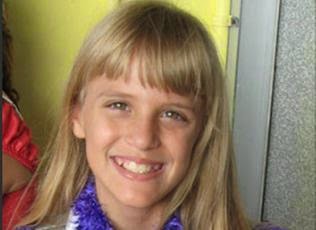
Nubia Barahona, 10, was found dead in the back of her adoptive father's pick-up truck

Read more here: http://www.miamiherald.com/2014/06/24/4199002/grand-jury-rips-floridas-dcf-for.html#storylink=cpy

In a 30-page report that explores whether the Department of Children & Families has improved since the shocking 2011 death of 10-year-old Nubia Barahona, grand jurors found much that pleased them. But they also scolded the agency for what they described as a systematic attempt to conceal the true number of children whose lives are cut short by abuse or neglect.
“I thank the members of the grand jury for their comprehensive look at Florida’s child welfare system,” said Mike Carroll,

the agency’s interim secretary. “It is clear from their thoughtful recommendations that they understand the challenges in the work we do, and it’s also clear they recognize our commitment to continuing to improve so we can better protect Florida’s children.”
The grand jury presentment, handed up to Miami-Dade Circuit Judge Gisela Cardonne Ely Tuesday afternoon, comes on the heels of a series of stories in the Miami Herald, called Innocents Lost. Details of the series are discussed in the report. In particular, grand jurors confirmed the Herald’s findings that DCF had revised its definition of “neglect,” resulting in an artificial reduction in the number of children reported to have died the past four years.
The report highlighted a several-paragraph excerpt from the series that detailed the deaths of four children in 2011and 2013 that DCF declined to verify as resulting from neglect. In one case, a 1-year-old boy drowned in a community pool during Memorial Day weekend three years ago while his mother texted friends away from the poolside. DCF said the mother wasn’t negligent because other adults at the pool were likewise failing to supervise their small children.


SOME CHANGES
Every person on the grand jury, the report said, “concluded that each of these preventable deaths occurred due to the neglect of each child’s parent(s),” the report said. “We are at an utter loss to understand how those who labor in the field of child protection and child welfare could intentionally and deliberately find that these deaths were not verified as acts of neglect.”
Changes in the way DCF investigates and discloses child death information, grand jurors wrote, left a cloud hanging over the agency, even as administrators tout reforms. “The public does not have confidence in the accuracy of the number of child deaths reported,” the report said, adding: “Aside from being misleading, reported reductions in the total number of deaths may only be a consequence of changing the definitions of abuse and neglect.”
At the center of the unusual report — grand juries seldom issue such presentments, opting instead to indict alleged offenders without comment — is Nubia Barahona. The tow-headed twin from West Miami was found soaked in toxic chemicals on Feb. 11, 2011, stuffed in a black garbage bag in the flatbed of her adoptive father’s pest control truck. In the passenger seat in front of her, Victor Barahona fought for his life after being doused in the same chemical stew. He survived.


The twins’ adoptive parents, Jorge and Carmen Barahona, remain in jail, awaiting trial on murder charges that potentially carry the death penalty. On July 25, 2011, an earlier Miami-Dade grand jury released a scathing report on DCF’s failure to protect Nubia. “The testimony we heard will stay with us forever, as a bad dream will sometimes stay, only this was not a dream but a reality too painful to fathom,” grand jurors wrote then.
That report criticized DCF for its “utter failure to have the full picture” of parents accused of wrongdoing, and suggested the agency was beset by “a persistent, insidious bias of trust. Here, these two factors combined to exponentially raise the risk of disaster,” the report concluded. “Murder was the result.”
In its report Tuesday, the new grand jury concluded that DCF is implementing improvements at the the agency’s abuse hotline, among child abuse investigators, and in the use of a tool that helps investigators assess risk.
“There is a marked difference between the practices and procedures child protective investigators employed pre-Barahona and the manner in which they conduct [child protective services] investigations now,” the report says.
Some professionals in the child welfare system expressed skepticism that much had changed, however, and suggested prosecutors might have focused on witnesses sympathetic to DCF. Esther Jacobo, who is chief of staff for State Attorney Katherine Fernandez Rundle, had been DCF’s interim secretary until two months ago. She was among the grand jury’s witnesses.
Miami-Dade Circuit Judge Rosa Figarola, who presides over child welfare cases, chairs the county’s Community Based Care Alliance and has been a persistent agency critic, was not asked to testify. “It is arrogant,” she said, “to have a grand jury investigation and not bring in people whom they are concerned might disagree with their point of view. You have to bring everyone involved to the table.”
Child abuse investigations, and the court petitions that sometimes follow, have “improved a little bit” since 2011, Figarola said. “But any attempt to portray the problems that have plagued the child welfare system as fixed should cause us all alarm and concern for the safety and welfare of our children,” she added.
Another judge, Jeri B. Cohen, who oversees the Miami Circuit’s child welfare drug court, said “any self-congratulation is premature.” Though Cohen had testified before the 2011 Nubia grand jury, she was not invited back this year.
Cohen said few of the initiatives grand jurors cited as improvements have been fully implemented, many are applied inconsistently, and virtually all are long overdue. “None of this stuff is working” yet, said Cohen, who also is a member of the child welfare alliance. “The judges are complaining like hell” that the system remains broken.
Though grand jurors commended DCF on the progress made since 2011, they also declared themselves “deeply troubled” by the Herald’s Innocents Lost series, which contained details on the deaths of 477 children — mostly infants, toddlers and children age 5 and below — whose parents had been the subject of at least one report to the state’s abuse hotline within the previous five years.

Gov. Rick Scott signed into law Monday an overhaul of DCF designed to stanch such deaths and create better agency oversight.
Grand jurors seemed particularly troubled by “discrepancies” between the number of child deaths DCF reported to the governor and Legislature, and the number identified by both the Herald and an independent consultant. “In all instances,” the report said, “the numbers given by the Herald, based on its review of DCF’s own records, were higher. Reportedly, numbers tallied by an independent source were also higher than those reported by DCF.”
Indeed, Nubia’s death never entered into an official DCF tally until more than three years after her killing created a firestorm statewide. Nubia’s death was “verified” as resulting from abuse on April 22, 2014 — a week after the first installment of Innocents Lost was published. Her formal death review was dated six days later; it was six pages long.
DISCOVERY
As recently as last month, the Herald discovered administrators in DCF’s Southeast Region — which includes Broward and Palm Beach counties, and which recorded the highest tally of child deaths in recent years — had failed to file required “critical incident reports” for 30 child deaths linked to abuse or neglect. At first, the agency attributed the withheld reports to a “misunderstanding.”
But earlier this month, DCF’s deputy secretary, Pete Digre, completed an internal investigation into the missing records without generating a single record. Carroll, the agency’s administrator, called the withheld reports “an attempt to address insufficiencies in data security.” He denied agency heads were seeking to conceal public records from the Herald.
On Tuesday, state Sen. Eleanor Sobel, a Hollywood Democrat who helped draft the legislation Scott signed the day before, called on the governor to launch an independent investigation into what she has repeatedly called “a cover-up.”
“It appears these were employees directing other employees to conceal child death reports, not simply a system or technical error,” Sobel wrote in a news release. “An independent investigation by a non-DCF related entity is the best way to clear the air and get an unobstructed view.”
“Sweeping child deaths under the rug will only serve to perpetuate a culture of cover-up and corruption; hiding the deaths should never be a solution.”
 http://www.miamiherald.com/2014/06/24/4199002/grand-jury-rips-floridas-dcf-for.html#storylink=cpy

Saturday, July 20, 2013

Foster Care Children, Now Grown, Tell Their Stories

The Calizaire sisters lived with countless families, and say they were abused by some of their foster care parents

Sophia and Princess Calizaire were introduced to foster care when they were seen wandering the streets looking for their mother, who had left them alone in a South Florida motel.
“We heard this big bang at the door,” said Sophia Calizaire. “We were trying to figure out who it was.”
It was the Florida Department of Children and Families coming to take them away, and they became foster care files that night, when they were just four and seven years old.
Sophia

The Calizaire sisters lived with countless families and were moved from one school to another. They say they were abused while staying with some of those foster care parents.
“She took a belt, she started beating me with the belt, picked up a hanger, she started beating me with the hanger, picked up a heel and started beating me with the heel,” said Sophia.
Her sister, Princess, was outside the room and could hear everything.  “I couldn’t do anything about it,” Princess said, with tears coming down her face.
The Calizaire sisters remember one foster care parent making them sleep in a dog house and eat dog food. They say some foster care parents wouldn’t feed them, would keep locks on the refrigerator and would sometimes starve them as a form of punishment.
“She told me to eat in front of my sister while she watched and my sister is hungry. I took out the chewed up piece of chicken from my mouth and gave it to her,” said Sophia, who said she was caught by her foster care mother. “She filled up the bathroom sink and she took my head and started drowning me. She kept drowning me until she felt she was ready to stop.”
Princess says the abuse not only came from the parents. “I stayed in a foster home down south where this boy used to try to rape me every night before I would go to sleep,” she said. “I used to be scared to go to sleep at night. I ran away from there.”
Mez Pierre, now 24, had a similar experience in foster care when he was a little boy. He says he was sexually abused by one of the teen foster kids staying in the same home.
“I was a little kid, they knew they could take advantage of me and I couldn’t fight back,” said Pierre. “But I did tell, I did tell someone and she didn’t do anything, she didn’t do anything.”
In 2005, DCF completed privatizing foster care. They contracted with 20 lead agencies throughout the state to oversee the care and needs of children in foster care.
Our Kids manages Miami-Dade and Monroe counties, while Child Net handles Broward County. The abuse endured by Pierre and the Calizaire sisters happened before the agencies took over, but they still say the system is far from perfect.
Some child advocate attorneys say the current privatized system does not work because lead agencies like Our Kids sub-contracted other organizations to monitor foster care children.
“So you have multiple corporations and agencies who supposedly are in charge and responsible for the lives of the children but tragically these children, real human beings, fall through the cracks in the system,” said attorney Howard Talenfeld.

DCF disagrees and says when it was a statewide agency it became quite unmanageable.
“Out of the one or two cases that you hear which are horrible cases and we need to learn from, there are thousands of children and families that DCF and Our Kids helps on a yearly and daily basis,” said DCF’s southern regional director, Esther Jacobo, who added that DCF is taking steps to improve the system.
Esther Jacobo
Jacobo said case managers have to see a child in care every 30 days and must have private conversations with that child so they feel comfortable opening up. She says there is an electronic monitoring system in place for case workers, which snaps a picture of the child with a time, date and location.
“It’s kind of like a GPS and statewide Tallahassee monitors that so you know what is happening in terms of the child visit,” Jacobo said.
Currently, there are just fewer than 20,000 children in foster care statewide, according to DCF. During a two-month span between August and October, there were 127 verified abuse cases across the state, 17 of them in the South Florida area.
http://www.nbcmiami.com/news/local/Foster-Care-System-Through-The-Eyes-of-The-Ones-Who-Lived-It-140874593.html

Friday, November 18, 2011

Former DCF Employee Arrested in Welfare Scam


- Stole $1.3 Million during DCF Employment


Miami (August, 25 2011) -


Fernandez Rundle announces that as a result of a 2 year joint investigation undertaken by the Miami-Dade State Attorney's Office and Florida Chief Financial Officer Jeff Atwater's Division of Public Assistance Fraud, former Department of Children and Families (DCF) employee Meera Khan has been arrested and charged with a lengthy list of crimes including: Racketeer Influenced and Corrupt Organization (RICO); Conspiracy to Commit RICO; Public Assistance Fraud Trafficking; Official Misconduct; Unlawful Compensation; Criminal Use of Personal Identification; Grand Theft and Petit Theft.

 Meera Khan was employed with DCF as an eligibility caseworker/processor in Miami for almost 9 years until she resigned her position. During that time, she created benefits cases using the identities and personal information of numerous individuals with whom she had been acquainted without their permission, which allowed her to use foods stamps for her personal benefit. Additionally, she would work with some unscrupulous businesses to convert food stamps into cash which she and the businesses would pocket. Additionally, Meera Khan would collect "insurance premiums", "processing fees", "application fees", "renewal fees" or "filing fees" for the processing and receipt of State of Florida Medicaid program benefits. The total loss to the people of Florida is estimated to be $1.3 million dollars.

State Attorney Katherine Fernandez Rundle
"When any public employee, particularly someone working with the needy, uses their position to enrich themselves, the people of Florida have a right to be frustrated and enraged," said Miami-Dade State Attorney Katherine Fernandez Rundle. "We can never tolerate fraud and theft by anyone, particularly by trusted public employees upon whom our community depends. Such thefts are the ultimate acts of betrayal. I'm very proud of the hard investigative work done by the Division of Public Assistance Fraud and my State Attorney's Office staff which has now brought Meera Khan to justice."

Florida's Chief Financial Officer Jeff Atwater
"The fraud in Florida's Medicaid and Public Assistance programs is costing honest Floridians as much as $2 billion annually. Cracking down on fraudsters like the one arrested today is key to stopping the bleeding of our state's budget," said Florida's Chief Financial Officer Jeff Atwater. "The partnership between my Division of Public Assistance Fraud and State Attorney Fernandez Rundle's office led to today's arrest, and we will continue to work together to bring criminals who scam the system to justice."


http://www.myfloridacfo.com/sitePages/newsroom/pressRelease.aspx?id=3935 

Time to relax